
The project
An industrial roof turned into an asset.
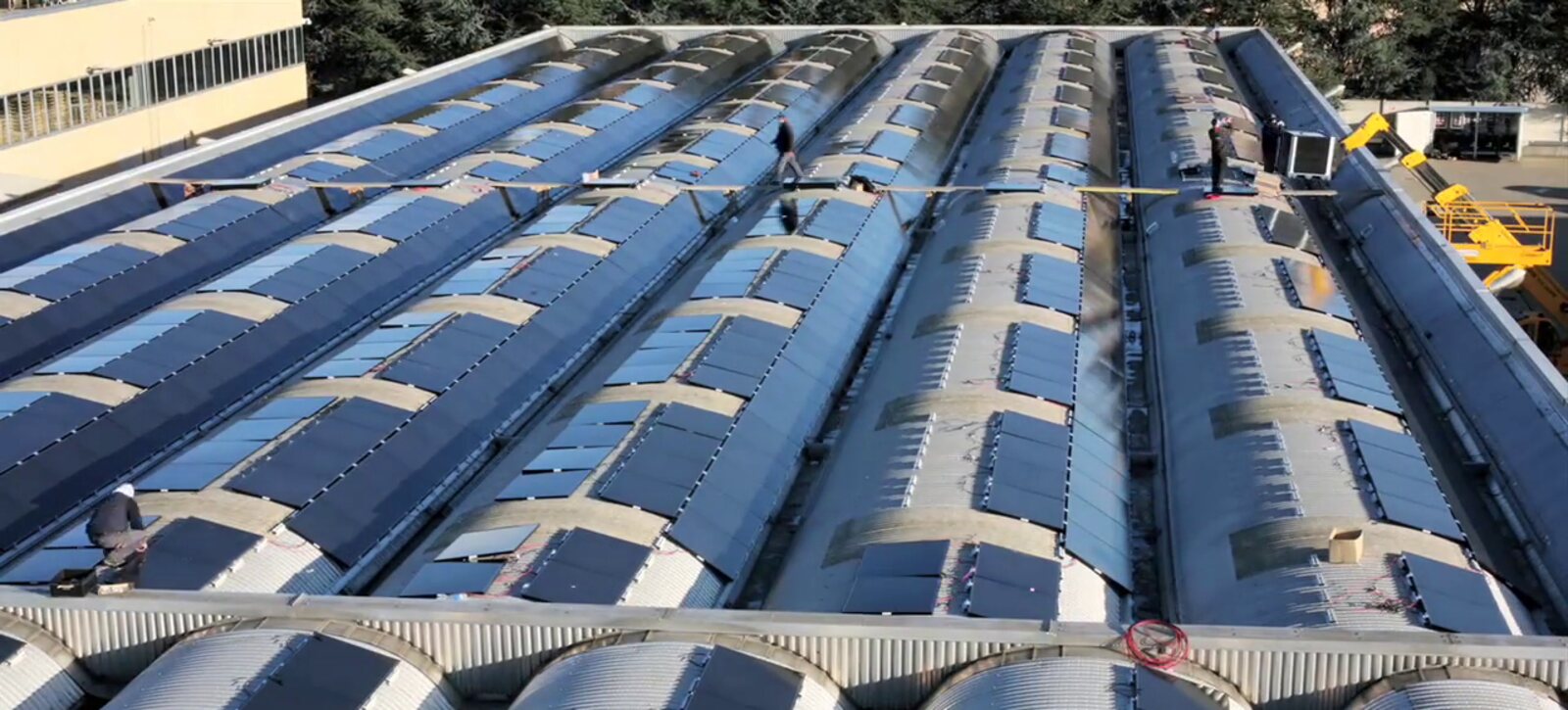
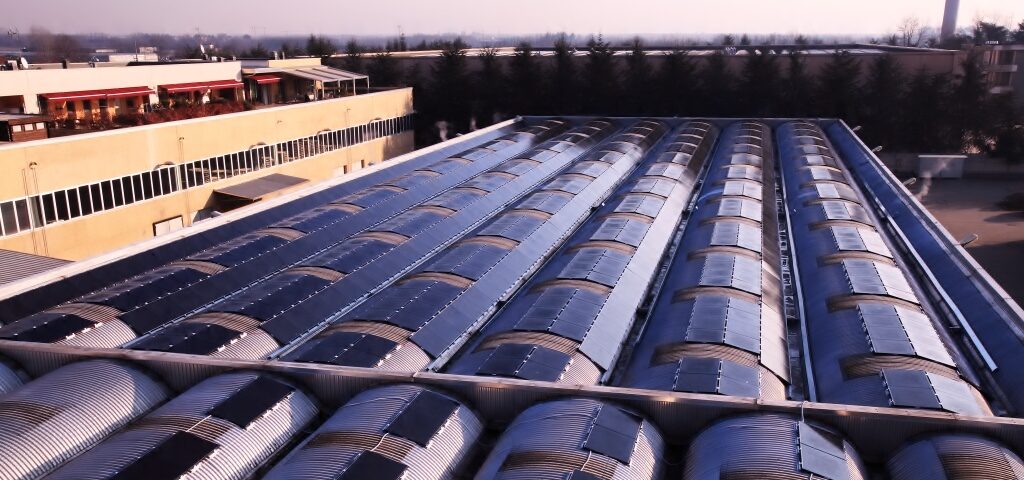
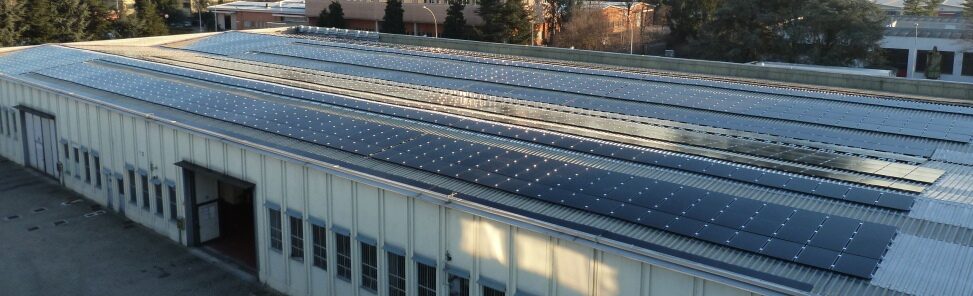
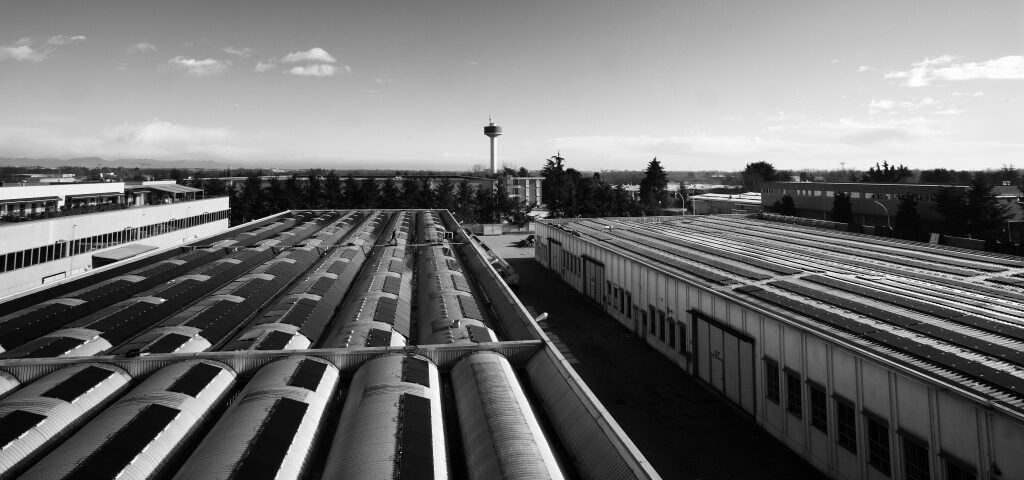
In 2012 Lares Energy built a photovoltaic plant on an industrial roof at Burago, documenting the whole process in a public case study.
The transaction required everything we do, all at once: technical assessment of the roof and of the technology, production estimates, financial structure, the relationship with the contractor and the subsequent management of the plant.
We selected Solar Frontier thin-film technology, with AEG Elettra as engineering partner.
Why thin film
Compared with crystalline silicon, thin film offers advantages that matter a great deal on a real industrial roof, where orientation is never ideal:
- Output falls off less at high temperatures.
- After settling in during the first weeks of operation, output remains stable over time.
- It is less affected by partial shading.
- It is relatively insensitive to sub-optimal tilt: it delivers close to its full productive potential even at shallow angles, adapting well to flush mounting on any pitch.
- It produces over more daylight hours, starting earlier and finishing later.
- It exploits diffuse and reflected light, outperforming crystalline modules under cloud cover.
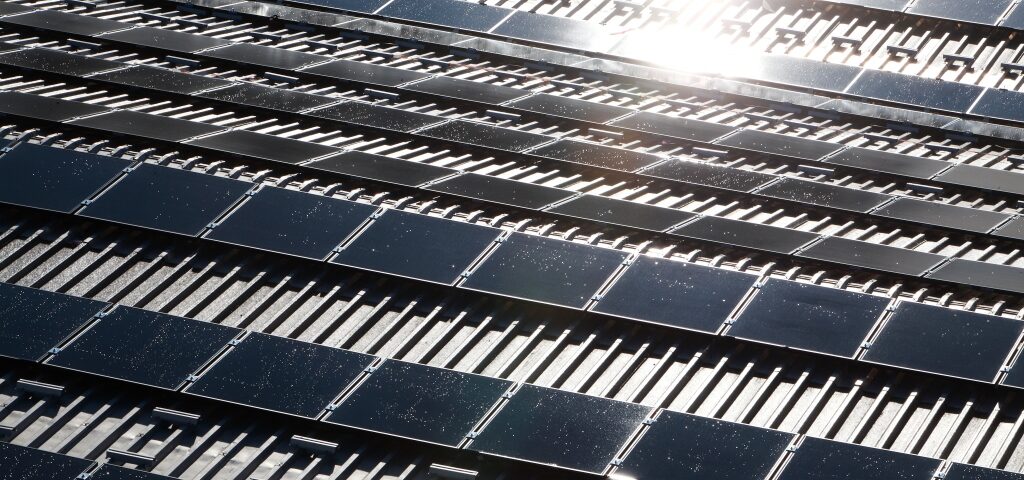
- It has a uniform black appearance, without the white lines typical of crystalline modules.
On site
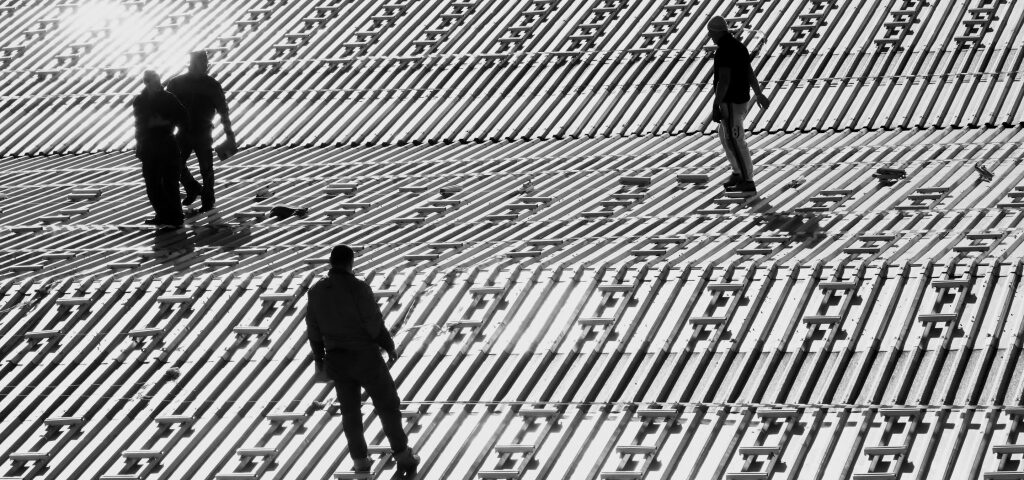
The installation, from bare roof to working plant.
Two minutes of time-lapse filmed during construction: the industrial roof fills with modules, row after row.
Technical background
How solar radiation is converted.
Solar radiation reaching the Earth can be converted into electricity in two ways: photovoltaic conversion, which turns light directly into electricity through the photovoltaic effect in certain semiconductor materials; and thermal conversion (thermodynamic), which concentrates radiation onto a heat-transfer fluid whose heat then feeds a conventional power station.
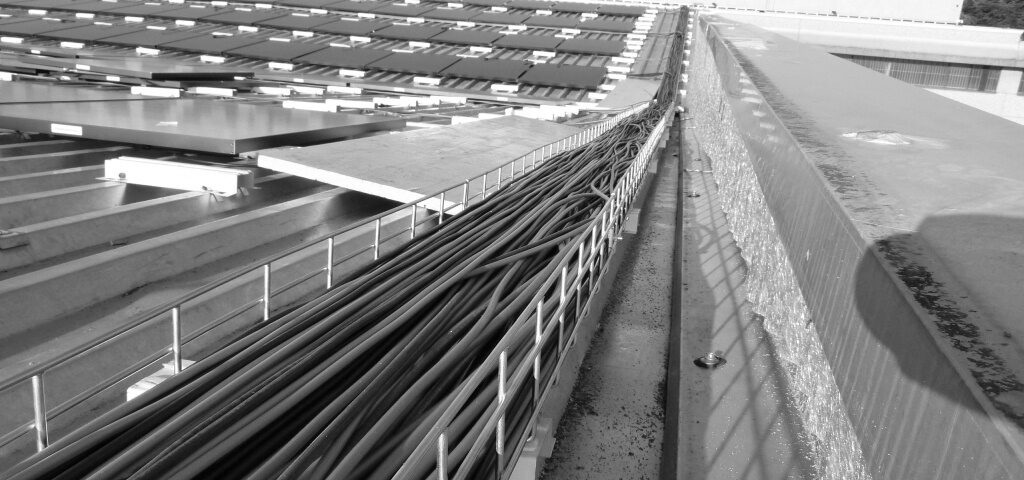
The elementary device of photovoltaic technology is the cell, made from suitably treated semiconductor material. Several cells connected in series or in parallel form a module; several modules connected and installed form an array. A plant consists of one or more arrays, the inverters that convert direct current into alternating current, and the protection and control components required by regulation.
Advantages of the technology
- No polluting emissions during operation.
- Savings in fossil fuels.
- High reliability: in most cases there are no moving parts, with a useful life of over 30 years.
- Low operating and maintenance costs.
- Modularity: to increase capacity you simply add modules and, where needed, inverters.
Materials
Industrially produced cells have historically had efficiencies between 5% and 17%. Crystalline silicon divides into monocrystalline, cut from cylindrical ingots and recognisable by its uniform dark colour, and polycrystalline, with its characteristic iridescent blue. Alongside silicon, copper indium diselenide (CIS), cadmium telluride (CdTe) and microcrystalline silicon combined with amorphous silicon (micromorph thin film) have all established themselves.
The technical data and regulatory references on this page date from the period in which the plant was built (2012).
A similar transaction to assess?
If you have a roof, a site or a project under study, we can look at it together.